The world can be a scary place sometimes. Now more than ever things can seem a little out of control or leave us with feelings of uncertainty about the future.
I’ll admit I’ve been a champion at catastrophising. If it were an Olympic event I would have been up there on the podium with the best of them. Add to that a few years of menopause induced anxiety, and it’s a wonder I got myself out the door each morning.
Fear can stop us from embracing our life, taking chances and finding success.
Learning to control that little voice inside that tells us all the reasons why we shouldn’t start, why we will most likely fail or why we just won’t be good enough can be the hardest obstacle to overcome.
You’d be hard pressed to find someone who has not experienced fear in their life but the difference is how some people overcome their fears and take back control. I’ve tried numerous methods over the years and have compiled a few, sometimes strange, strategies that may help when that voice stops us from getting out and enjoying our life.
The oldest and strongest emotion of mankind is fear, and the oldest and strongest kind of fear is fear of the unknown.
– H.P. Lovecraft
understanding fear
Ok, so let’s geek out on the research theory first. I love this stuff.
Studies have shown that when faced with uncertainty our brains automatically shift control from the rational brain to the limbic system, the area where emotions, such as fear and anxiety, are generated. The more uncertain the outcome, the more control the limbic system takes.
Now, this made a lot of sense thousands of years ago when our ancestors relied on fear and caution when entering unknown, often dangerous territory. After all, who knew what was lurking around the next bend.
The problem is the world has now changed, we have changed, but sadly, this function has not evolved along with us.
Whilst the world is full of uncertainty our response to it, more often than not, is an overreaction from a system that simply doesn’t understand the difference between being attacked by a lion or being caught in the middle of a Boxing Day Sale stampede.
Fear has one job and one job only, to keep us safe, and it takes this role very seriously regardless of the situation.
So in a nutshell, fear is a primitive part of our brain that controls our response to uncertainty. It’s hard-wired in there so there’s no way to remove it. It cannot distinguish the difference between real or perceived danger and it has the emotional intelligence of a two year old.
So how do we take back control?
get rational
Like any two year old, fear can get a little unmanageable and if you don’t step in and get the upper hand, it’s going to end in tears and a tantrum, most likely from you. But trying to be rational with a toddler is a lesson in patience and composure.
Learning to see our fears for what they are can open the door to controlling our wayward thoughts.
By using the ‘rational’ side of our brains we can train ourselves to calmly look at our fear, see it for what it truly is, label it and in turn remove any control it may have over us.
So how can we sort through what is real and what is irrational?
Engage in conversation
I was listening to a Podcast a few years ago with Elizabeth Gilbert, author of two of my favourite books, Eat Pray Love and Big Magic. To my surprise she disclosed she has suffered from fear her entire life but over time had learned to find ways to co-exist with it. What she would do before any new creative project was to sit down and talk with her fear about what she was embarking on and how it could come along for the journey but under no circumstances did it have a voice.
Now, I know to most people talking to an ‘imaginary friend’ sounds absolutely bonkers, but I thought it was absolutely genius and most importantly, completely rational.
I name my car, I name and talk to my plants, I even name my journal so why not my fear.
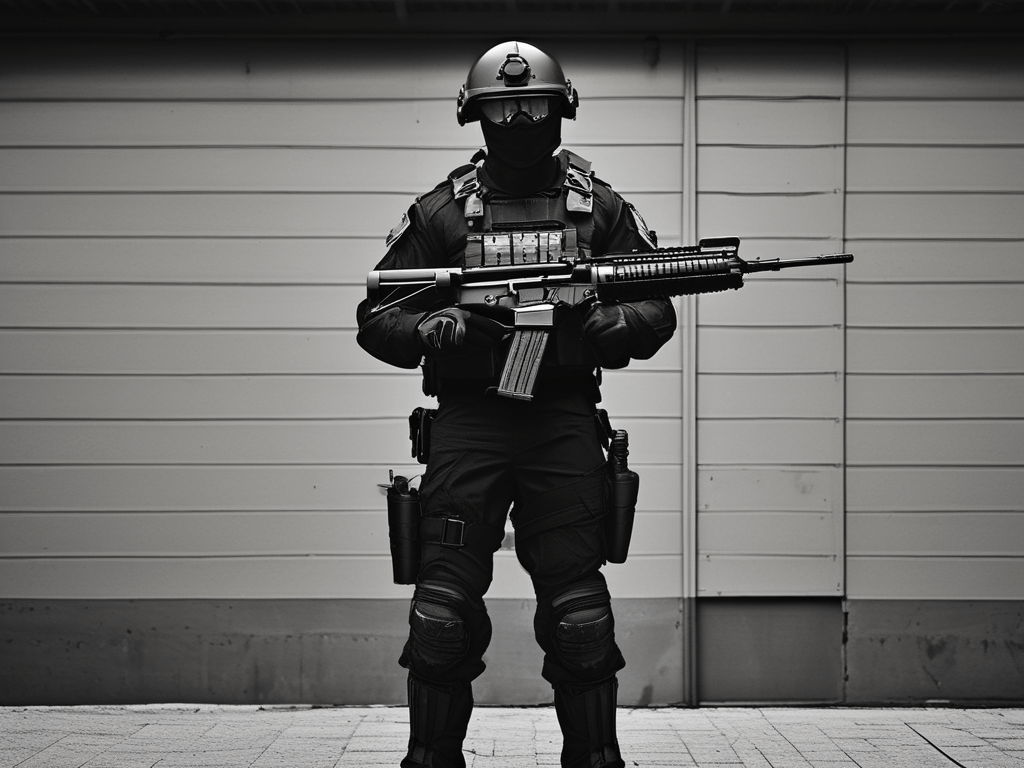
So Bruce was born. He’s a stickler for dress code, cannot hold an interesting conversation, doesn’t smile, has no idea of personal boundaries and, let’s face it, is mind-numbingly boring.
But personifying my fear was the key to understanding my wayward thoughts. It enabled me to put form to something that had been a faceless presence for many years. Plus, talking to an actual face in my head doesn’t make me quite as crazy, right? Technically, he wears a mask so I don’t see his face but you know what I mean.
So what do we talk about?
thinking positively
We have talked A LOT over the years and I’ve found that positivity is the antidote to fear.
Instead of focusing on the negative, I’ve learned to consciously manoeuvre my thoughts towards a brighter outcome. Being able to counteract any of Bruce’s worries with a positive comment ensures he has nothing further to say. I listen to his endless arguments, I acknowledge them, I thank him for worrying and then I go ahead with what I want to do.
So when I decided to start a blog and Bruce predictably charges in, pistols in hand, ready for action, the usual dialogue is something like:
“You want to start a blog? What if no one reads it?” , or
“Why would you start a blog, you know you aren’t a writer.”, or my favourite
“Why on earth would you put yourself out on the internet to be humiliated. Are you insane!”
For example, take the above thought: “Why would you start a blog, you know you aren’t a writer” I could either listen to him and agree on all the negatives or I could take the statement, face Bruce (with his faceless face) and smile and say, “But what if I am, how fun would that be!”
So despite fear being a control freak, it’s a surprisingly bad debater.
The moment I began acknowledging my fears and counteracting them with a positive comment, I’ve found it has no comeback. And just like a two year old, the quieter it is, the calmer I feel.
I’m not afraid of storms, for I’m learning how to sail my ship.” – Louisa May Alcott
let go of control
Life can be full of bad choices, missed opportunities and failures but they also live side by side with the successful outcomes. Learning to let go and relinquish control is what makes taking the chance all the more exciting. Starting and failing is always better than never starting at all.
So, whenever I’m starting something new, Bruce will naturally come to attention and before he can get a word in, I shut down the conversation with “Stand down Bruce, I’m just (insert task)”. He’s learning to listen.
We’ve come to an understanding about the blog. He lets me write and try something new and I let him come along as long as he keeps quiet in the corner.
The best thing is we’re learning to co-exist, he’s happy to wear his kevlar and side-arms and I’m excited get go out and enjoy life. A win win situation for us both I think.
Until next time,

Comments are always welcome. I’d love to know how you overcome your fears or whether fear has held you back in life. Thank you for reading.




 Glowing Grey
Leave a comment